Thursday, March 26
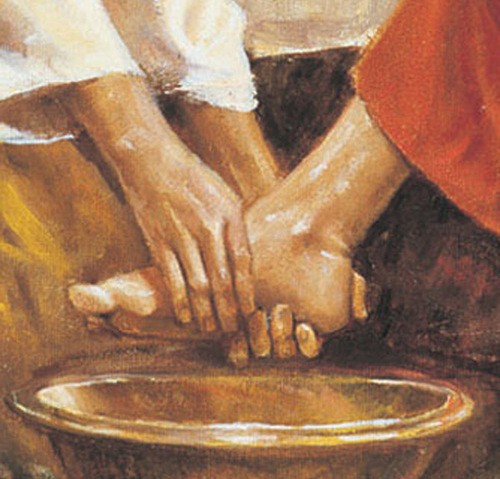
The evening meal was in progress, and the devil had already prompted Judas, the son of Simon Iscariot, to betray Jesus. Jesus knew that the Father had put all things under his power, and that he had come from God and was returning to God; so he got up from the meal, took off his outer clothing, and wrapped a towel around his waist. After that, he poured water into a basin and began to wash his disciples’ feet, drying them with the towel that was wrapped around him....When he had finished washing their feet, he put on his clothes and returned to his place. “Do you understand what I have done for you?” he asked them. “You call me ‘Teacher’ and ‘Lord,’ and rightly so, for that is what I am. Now that I, your Lord and Teacher, have washed your feet, you also should wash one another’s feet. I have set you an example that you should do as I have done for you. Very truly I tell you, no servant is greater than his master, nor is a messenger greater than the one who sent him.
~John 13:2-5 & 12-16
__________________________________________
"Kiss my ring. Bow at my feet. Wash my feet. Make sure you serve and honor me the way that I deserve." These are things the gods and goddesses of the religious marketplace of the ancient world demanded. They are actions nearly every king, ruler, and person in power has demanded throughout human history. Or at least they thought it if they didn’t say it. These are words Jesus never said.
During Jesus' last night, he revealed in a startling way what had been true from day one. As God's presence on earth:
On his last night before his death, he washed his disciples' feet. Many of us probably know the basics: it was the job of a slave to wash the feet of their master. It was just another way the ancient world reinforced the status quo of seeking prominence. It all started from the top: this is how the gods behave, which trickles down to the earthly powers and rulers, down to the social fabric of society, down to the household and family.
Jesus redefines the whole system.
Jesus, as God's presence in a human life, came and served humanity, and did not demand us to serve him. He made it ultra clear: “The Son of Man came NOT to be served, but to serve” (Matthew 20:28).
There's no category for this. "The system didn't plan for this," as hip-hop artist Lecrae puts it in his song "Anomaly." This isn't just "servant-leadership." The “leadership” idea is absent here for Jesus. It’s just servant. It requires following because this is how God works. It's not a way of leadership, of chasing the status of "leader," but just in a more humble way. Jesus abandons "leader" seeking altogether. In his life and actions, he brings a complete transformation of how we think and live. Our minds and ways of thinking are not able to really handle it. I know this well.
Our human default method of thinking revolves around merit. We’re constantly striving to be better, do more, climb higher. Our world tells us you want to get to the place where you are the one in a position of being served. But you have to earn it. This affects our life with God. The downside of this is that the merit system communicates that we must, like we're an employee in God's business, do the right things to keep the owner happy with us. When we fall short, the relationship becomes distorted, we can't make eye contact, we try to evade talking to the boss. We suffer under moral-perfection syndrome, and it’s ruining our lives.
Too many people carry a sense that they have disappointed God with their lives. The question: Am I "good enough" to get to heaven? is a sure sign we've imbibed on the merit and status seeking of broken humanity. Many people bend over backwards to alleviate the pressure and convince themselves (and others) that they are "good enough," or that it's "ok to not be good enough." Feeling cornered, we try to justify who we are saying, "Well, deep down I'm a good person, it's just that I've made some mistakes, but who doesn't, right?"
Moral-perfection syndrome leads people to either object to the religious god who demands morally perfect, good-citizen lives, or to buckle under the weight of trying to be perfect. There's something deeply off about the whole system.
When Jesus reveals a God who didn't advertise his greatness or demand that we kiss his feet, say the right prayer, or attend church at least twice per month, he breaks the system. Jesus shows us that God came to serve us. We don't know what to do with that. We might like that idea, but our lives are still stuck in the old system. If God serves us, then what are we supposed to do? Just nothing? We can't get our merit-based heads around it. We think it will lead to laziness.
When Jesus washes his disciples' feet, when he says "this is my body, given for you," he's breaking the system, shattering the status quo. He's giving himself to us, for us, to break us free from the weight of falling short and free us into something new: true life, joy, peace.
Taking part in the life of Jesus – living the life God made us for – is not about achieving some ideal of worthiness. Jesus embraces a way of humanity that is overlooked and under-class. He shows us the way of God that is not about achieving, but serving. Sharing in the life of God is about being transformed and changed by the God who serves. He only asks that we allow our dirty feet to be lovingly cleansed, rather than hidden from sight. If this is how God is, then this is how we should be. We don’t need to be noticed or patted on the back for how spiritual we are. We just receive the cleansing of the Lord who serves, and then, like him, lovingly serve our sister and brother.
Jesus came to serve, to lift humanity to himself, because we can’t get there by our merits, honors, or talents. Let Jesus reveal a God who comes to wash your feet. If he can’t serve you, he can’t be your master and Lord. It’s what he came to do.
Lord Christ, you have come to serve us and wash our feet. May we receive your cleansing and be transformed from our status-seeking to embrace your ways of lowliness, peace, and love. Amen.
Songs for today:
"My Sweet Lord"
"Carry You"
"We Are Not as Strong as We Think We Are"
"Kiss my ring. Bow at my feet. Wash my feet. Make sure you serve and honor me the way that I deserve." These are things the gods and goddesses of the religious marketplace of the ancient world demanded. They are actions nearly every king, ruler, and person in power has demanded throughout human history. Or at least they thought it if they didn’t say it. These are words Jesus never said.
During Jesus' last night, he revealed in a startling way what had been true from day one. As God's presence on earth:
- He was born in obscurity and poverty in a common room filled with animals, the living "tools" of a pre-tech age. He died among the common. In his resurrection there was no celebration. From birth to resurrection, there was no show, no fame, or headline.
- He lived among the struggling and the sick, among the sinners and the burdened. He didn't come to lend a hand from a higher, safer position. He was no different in his life than they. He never made it his mission to make his way out and climb to the top of the social ladder. Jesus is not a poster God for the American dream.
- He tended to the needs of the forgotten with his own hands. He wasn't above going into the homes of everyday people who didn't have it all together. He healed through touch and human embrace. Social expectation would have said, "you don't belong there, Jesus," or "you're above that." He went there anyway.
On his last night before his death, he washed his disciples' feet. Many of us probably know the basics: it was the job of a slave to wash the feet of their master. It was just another way the ancient world reinforced the status quo of seeking prominence. It all started from the top: this is how the gods behave, which trickles down to the earthly powers and rulers, down to the social fabric of society, down to the household and family.
Jesus redefines the whole system.
Jesus, as God's presence in a human life, came and served humanity, and did not demand us to serve him. He made it ultra clear: “The Son of Man came NOT to be served, but to serve” (Matthew 20:28).
There's no category for this. "The system didn't plan for this," as hip-hop artist Lecrae puts it in his song "Anomaly." This isn't just "servant-leadership." The “leadership” idea is absent here for Jesus. It’s just servant. It requires following because this is how God works. It's not a way of leadership, of chasing the status of "leader," but just in a more humble way. Jesus abandons "leader" seeking altogether. In his life and actions, he brings a complete transformation of how we think and live. Our minds and ways of thinking are not able to really handle it. I know this well.
Our human default method of thinking revolves around merit. We’re constantly striving to be better, do more, climb higher. Our world tells us you want to get to the place where you are the one in a position of being served. But you have to earn it. This affects our life with God. The downside of this is that the merit system communicates that we must, like we're an employee in God's business, do the right things to keep the owner happy with us. When we fall short, the relationship becomes distorted, we can't make eye contact, we try to evade talking to the boss. We suffer under moral-perfection syndrome, and it’s ruining our lives.
Too many people carry a sense that they have disappointed God with their lives. The question: Am I "good enough" to get to heaven? is a sure sign we've imbibed on the merit and status seeking of broken humanity. Many people bend over backwards to alleviate the pressure and convince themselves (and others) that they are "good enough," or that it's "ok to not be good enough." Feeling cornered, we try to justify who we are saying, "Well, deep down I'm a good person, it's just that I've made some mistakes, but who doesn't, right?"
Moral-perfection syndrome leads people to either object to the religious god who demands morally perfect, good-citizen lives, or to buckle under the weight of trying to be perfect. There's something deeply off about the whole system.
When Jesus reveals a God who didn't advertise his greatness or demand that we kiss his feet, say the right prayer, or attend church at least twice per month, he breaks the system. Jesus shows us that God came to serve us. We don't know what to do with that. We might like that idea, but our lives are still stuck in the old system. If God serves us, then what are we supposed to do? Just nothing? We can't get our merit-based heads around it. We think it will lead to laziness.
When Jesus washes his disciples' feet, when he says "this is my body, given for you," he's breaking the system, shattering the status quo. He's giving himself to us, for us, to break us free from the weight of falling short and free us into something new: true life, joy, peace.
Taking part in the life of Jesus – living the life God made us for – is not about achieving some ideal of worthiness. Jesus embraces a way of humanity that is overlooked and under-class. He shows us the way of God that is not about achieving, but serving. Sharing in the life of God is about being transformed and changed by the God who serves. He only asks that we allow our dirty feet to be lovingly cleansed, rather than hidden from sight. If this is how God is, then this is how we should be. We don’t need to be noticed or patted on the back for how spiritual we are. We just receive the cleansing of the Lord who serves, and then, like him, lovingly serve our sister and brother.
Jesus came to serve, to lift humanity to himself, because we can’t get there by our merits, honors, or talents. Let Jesus reveal a God who comes to wash your feet. If he can’t serve you, he can’t be your master and Lord. It’s what he came to do.
Lord Christ, you have come to serve us and wash our feet. May we receive your cleansing and be transformed from our status-seeking to embrace your ways of lowliness, peace, and love. Amen.
Songs for today:
"My Sweet Lord"
"Carry You"
"We Are Not as Strong as We Think We Are"
No Comments