Lord, you are the God who saves me; day and night I cry out to you.
May my prayer come before you; turn your ear to my cry.
I am overwhelmed with troubles and my life draws near to death.
I am counted among those who go down to the pit; I am like one without strength. I am set apart with the dead, like the slain who lie in the grave, whom you remember no more, who are cut off from your care. Do you show your wonders to the dead? Do their spirits rise up and praise you? Is your love declared in the grave, your faithfulness in Destruction? Are your wonders known in the place of darkness, or your righteous deeds in the land of oblivion?
All day long suffering surrounds me like a flood; they have completely engulfed me. You have taken from me friend and neighbor—darkness is my closest friend.
~Psalm 88:1-5, 11-12 & 18
________________________________________
I’m going to bet that most Christians have not really spent time with Psalm 88. The honest struggle with life and with God’s apparent silence flies in the face of much of American Christian thinking. We’re not supposed to say things like that, are we? Questioning God’s goodness or groaning over our struggles is not very strong faith, is it? It’s not very joyful. Aren’t we supposed to be positive and joyful always? Apparently the psalmist didn’t read that part of Scripture.
Psalm 88 gives voice to a reality that “faith” doesn’t overcome: to be human is to suffer. In fact, nearly everyone you know is suffering something right now. There’s a burden, a pain, a loss, a hurt that is plaguing every person at this moment. You are one of them.
Psalm 88 is one of the most honest Psalms in Scripture. It’s not the only one; half of the psalms are like this. That’s not a neat Bible stat. This suggests something of what “Biblical” faith should be like. Psalm 88 is distinct, however, because it ends in darkness. There is no “but I will praise your name, Lord” ending. While Psalm 88 begins recognizing the Lord is the one who saves, at the end the psalmist has a hard time experiencing that truth.
When suffering, pain, or loss show up, we want to minimize it. We want to ignore it. We want to push it to the side and occupy ourselves with busyness. We try to overcome it with “happiness,” or positivity or optimism.
But suffering, pain, and loss don't go away. And they won’t. As soon as the present burden or suffering passes (if it does), another is waiting in line. It’s like being at the DMV. There are several burdens and sufferings in the room. Each one just takes a number to come up and sit with us. This is life.
I don’t mean to paint a negative picture. If this is seen as a “negative” picture, however, I wonder if it’s a sign that we’re too used to a faith that doesn’t make room for lament. Yet, struggle, suffering, darkness, and pain realities for life “under the sun” as the great teacher in Ecclesiastes puts it (Ecclesiastes 2:17-26). This is not negative. It’s reality. Pretending it’s not there doesn’t make it go away. We have to learn how to sit with it.
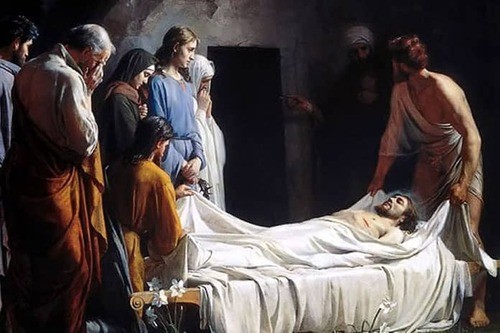
This is why Holy Saturday matters.
So often it seems that Christians treat Good Friday as the day Jesus forgave us of our sins, and jump quickly to Easter as the day when we celebrate triumph and overcoming the grave. We hear “it’s Friday, but Sunday’s ‘comin!” Not so fast, Tigger.
Between Friday and Sunday is Saturday. And it’s not a skip-over day. A narrative that overlooks the silence of Saturday results in a “skip-over” faith. This sort of faith misses the way that the story of Jesus’ death and resurrection takes into account the real darkness and emptiness of life in this world. Yes, resurrection means God destroys death and suffering. But a central part of the story of Jesus is embracing the darkness, emptiness, and pain of death and loss. Jesus goes there. So must we. In this life we still must sit with it. Holy Saturday reminds us of that, and it teaches us how to sit with it.
In the face of the emptiness and darkness of real life, rather than being surprised or dismayed, rather than ignoring it or masking it over with toxic positivity, rather than not knowing how to sit with it, we learn the Christian practices of silence, stillness, and lament.
Jesus’ disciples probably didn’t stop crying out to God after Jesus was buried. And in those days he was in the tomb, they probably couldn’t see through the darkness. In fact, all they knew was darkness. Blinding darkness. They didn’t see resurrection coming. All they knew is that it was over. And God seemed silent. I bet Psalm 88 (and others) gave them the words.
Psalm 88 (and others like it) suggests that this honest emptiness before God is ok. In fact, maybe this is an important part of our lives with God.
Darkness. Hiddenness. Emptiness. Hopelessness.
Recognizing this and sitting with our darkness, pain, and loss does not mean life is or will always be like this. It doesn't mean we'll turn into Eeyore from Winnie the Pooh. To cry out in hopelessness does not mean we’ve lost faith. It actually means we'll deepen our faith and connection to Jesus.
Life in this world and the life of faith necessarily includes this sort of experience. And we should probably, like the Psalmist, make space for it. We don’t need to triumph over it too quickly with resurrection. It’s necessary to give space to struggle, to admit that resurrection doesn’t always look like it’s going to happen, to recognize that sometimes the horizon seems dark, and we’re not sure that the sun will rise again. We have those moments in life. Jesus did.
Holy Saturday makes those moments sacred.
God of hiddenness, sometimes the horizon is too dark to see you. It seems as if you have up and gone. With Christ, call us into the darkness to sit with Christ who died. Give us eyes to see in the darkness. Amen.
Songs for today:
"Death be Not Proud"
"The Year of the Locust"
"The Rain Keeps Falling"
"Helpless Hope"
I’m going to bet that most Christians have not really spent time with Psalm 88. The honest struggle with life and with God’s apparent silence flies in the face of much of American Christian thinking. We’re not supposed to say things like that, are we? Questioning God’s goodness or groaning over our struggles is not very strong faith, is it? It’s not very joyful. Aren’t we supposed to be positive and joyful always? Apparently the psalmist didn’t read that part of Scripture.
Psalm 88 gives voice to a reality that “faith” doesn’t overcome: to be human is to suffer. In fact, nearly everyone you know is suffering something right now. There’s a burden, a pain, a loss, a hurt that is plaguing every person at this moment. You are one of them.
Psalm 88 is one of the most honest Psalms in Scripture. It’s not the only one; half of the psalms are like this. That’s not a neat Bible stat. This suggests something of what “Biblical” faith should be like. Psalm 88 is distinct, however, because it ends in darkness. There is no “but I will praise your name, Lord” ending. While Psalm 88 begins recognizing the Lord is the one who saves, at the end the psalmist has a hard time experiencing that truth.
When suffering, pain, or loss show up, we want to minimize it. We want to ignore it. We want to push it to the side and occupy ourselves with busyness. We try to overcome it with “happiness,” or positivity or optimism.
But suffering, pain, and loss don't go away. And they won’t. As soon as the present burden or suffering passes (if it does), another is waiting in line. It’s like being at the DMV. There are several burdens and sufferings in the room. Each one just takes a number to come up and sit with us. This is life.
I don’t mean to paint a negative picture. If this is seen as a “negative” picture, however, I wonder if it’s a sign that we’re too used to a faith that doesn’t make room for lament. Yet, struggle, suffering, darkness, and pain realities for life “under the sun” as the great teacher in Ecclesiastes puts it (Ecclesiastes 2:17-26). This is not negative. It’s reality. Pretending it’s not there doesn’t make it go away. We have to learn how to sit with it.
This is why Holy Saturday matters.
So often it seems that Christians treat Good Friday as the day Jesus forgave us of our sins, and jump quickly to Easter as the day when we celebrate triumph and overcoming the grave. We hear “it’s Friday, but Sunday’s ‘comin!” Not so fast, Tigger.
Between Friday and Sunday is Saturday. And it’s not a skip-over day. A narrative that overlooks the silence of Saturday results in a “skip-over” faith. This sort of faith misses the way that the story of Jesus’ death and resurrection takes into account the real darkness and emptiness of life in this world. Yes, resurrection means God destroys death and suffering. But a central part of the story of Jesus is embracing the darkness, emptiness, and pain of death and loss. Jesus goes there. So must we. In this life we still must sit with it. Holy Saturday reminds us of that, and it teaches us how to sit with it.
In the face of the emptiness and darkness of real life, rather than being surprised or dismayed, rather than ignoring it or masking it over with toxic positivity, rather than not knowing how to sit with it, we learn the Christian practices of silence, stillness, and lament.
Jesus’ disciples probably didn’t stop crying out to God after Jesus was buried. And in those days he was in the tomb, they probably couldn’t see through the darkness. In fact, all they knew was darkness. Blinding darkness. They didn’t see resurrection coming. All they knew is that it was over. And God seemed silent. I bet Psalm 88 (and others) gave them the words.
Psalm 88 (and others like it) suggests that this honest emptiness before God is ok. In fact, maybe this is an important part of our lives with God.
Darkness. Hiddenness. Emptiness. Hopelessness.
Recognizing this and sitting with our darkness, pain, and loss does not mean life is or will always be like this. It doesn't mean we'll turn into Eeyore from Winnie the Pooh. To cry out in hopelessness does not mean we’ve lost faith. It actually means we'll deepen our faith and connection to Jesus.
Life in this world and the life of faith necessarily includes this sort of experience. And we should probably, like the Psalmist, make space for it. We don’t need to triumph over it too quickly with resurrection. It’s necessary to give space to struggle, to admit that resurrection doesn’t always look like it’s going to happen, to recognize that sometimes the horizon seems dark, and we’re not sure that the sun will rise again. We have those moments in life. Jesus did.
Holy Saturday makes those moments sacred.
God of hiddenness, sometimes the horizon is too dark to see you. It seems as if you have up and gone. With Christ, call us into the darkness to sit with Christ who died. Give us eyes to see in the darkness. Amen.
Songs for today:
"Death be Not Proud"
"The Year of the Locust"
"The Rain Keeps Falling"
"Helpless Hope"
No Comments